Why Hotel Management Is One of India’s Best Career Choices in 2025 — And How RPH College Prepares You for It


If you’re a student standing at the crossroads of career decisions, wondering which path offers genuine growth, global mobility, and long-term stability, here’s a fact worth knowing: India’s hospitality and tourism industry is on the verge of one of its biggest expansions in decades. And if you’re considering hotel management as a career in India in 2025, the timing could not be more strategic.
India’s Hospitality Industry: A Sector in Full Bloom
The numbers tell a compelling story. According to the Indian Brand Equity Foundation (IBEF), the Indian hospitality sector is projected to reach a market size of USD 247.31 billion by 2030, growing at a compound annual growth rate of over 13%. Post-pandemic recovery has not just restored the industry to its earlier levels — it has propelled it far beyond them.
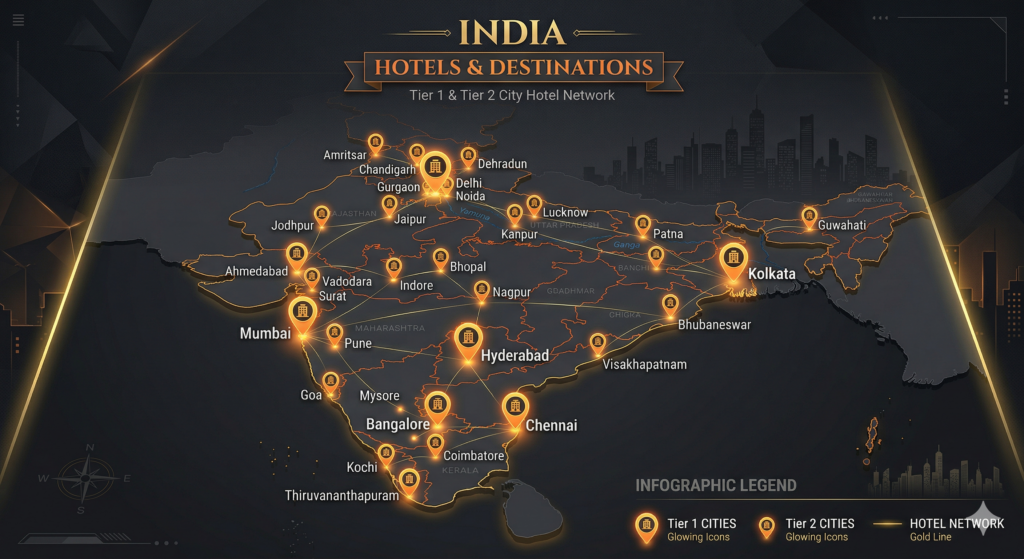
Foreign tourist arrivals are surging. Domestic travel is at an all-time high. The Indian government’s ambitious tourism infrastructure push, including the development of pilgrimage circuits, coastal tourism, and heritage zones, is generating demand for skilled hospitality professionals at every level. International hotel chains — Marriott, Hyatt, IHG, Accor, and Taj Hotels — are aggressively expanding their presence in Tier I and Tier II cities alike. This means thousands of new properties opening, and each property requiring trained, capable, forward-thinking professionals to run them.
It’s also worth noting that India is now the third-largest aviation market in the world, with the airline industry adding routes and seats at a pace that few anticipated just five years ago. The ripple effect on hotels, F&B, and travel services is enormous.
For students thinking about hospitality management salary in India, this growth directly translates to better entry-level packages, faster promotions, and significantly stronger career trajectories than many conventional sectors.
What “Hotel Management” Actually Means as a Career
Here’s where most students and parents are pleasantly surprised. Hotel management is not a narrow qualification for one type of job. It is a broad, versatile foundation that opens doors across an entire ecosystem of industries.
Hotels and Resorts are the obvious starting point — front office management, housekeeping, food and beverage service, revenue management, and general management roles are all in constant demand. But the career pathways extend far beyond:
- Airlines and Airport Hospitality: Guest services, lounge management, and inflight service roles require the same core skills of service excellence and operational efficiency.
- Cruise Lines: Global cruise operators actively recruit from Indian hospitality schools. These roles offer exposure to international environments and competitive pay packages.
- Event Management and MICE: India’s growing conference, wedding, and corporate event sector needs professionals who understand logistics, catering, and guest experience at scale.
- Food and Beverage Entrepreneurship: Many hotel management graduates go on to open successful restaurants, cloud kitchens, or catering businesses — equipped with both the technical knowledge and business acumen.
- Tourism Boards and Government Bodies: With India expanding its tourism infrastructure, there is increasing demand in public sector roles focused on destination management and hospitality policy.
The common thread across all of these is human connection, operational precision, and service leadership — and these are exactly the skills a rigorous hotel management education builds.
Salary Progression: What Can You Actually Earn?
This is the question parents most want answered, and the data is reassuring.
A hotel management graduate in India typically starts with a salary ranging from ₹2.5 to ₹4.5 lakh per annum at entry level. Within three to five years of experience, mid-level roles in F&B management, front office supervision, or events coordination bring compensation in the range of ₹6 to ₹12 lakh per annum. At senior and general management levels, especially in luxury properties or multinational chains, compensation packages often exceed ₹25 to ₹40 lakh per annum.
Professionals who take international postings — and the demand from Southeast Asia, the Middle East, Europe, and the UK remains consistently high — often see their earnings multiply significantly alongside the lifestyle and exposure benefits.
The hospitality sector also rewards performance more directly than many white-collar industries. Bonuses, service charges, tips, and incentives form a meaningful component of total compensation, particularly in luxury and fine dining environments.
Why Mumbai Is the Ideal City to Study Hospitality
When it comes to understanding why to study hotel management in Mumbai, the city itself is the classroom.
Mumbai is India’s financial capital, entertainment hub, and one of its most visited cities by both domestic and international tourists. It is home to some of the country’s most iconic luxury hotels — the Taj Mahal Palace, The Oberoi, Trident, and Four Seasons among them. It hosts hundreds of major corporate events, film industry gatherings, international conferences, and cultural festivals every year.
Studying hospitality in Mumbai means having direct, consistent access to the very industry you’re preparing to enter. Internship opportunities, campus placements, industrial visits, and networking events are not abstract possibilities — they are built into the lived experience of studying in this city. Guest lectures from working professionals, exposure to world-class properties, and proximity to industry decision-makers all accelerate learning in ways that no textbook alone can replicate.
Mumbai also has one of India’s most active F&B scenes, a growing events and wedding management industry, and strong airline connectivity — all sectors that absorb hospitality graduates readily.
How RPH College Prepares You for This Industry
RPH College, affiliated with the University of Mumbai and offering programmes in hotel management, was built around one central idea: that genuine industry readiness is more valuable than classroom theory alone.
Curriculum designed for today’s industry: RPH College’s hotel management programme covers the full spectrum — food production, accommodation management, front office operations, food and beverage service, housekeeping, and hospitality marketing — aligned with current industry standards and university requirements.
Practical training at the core: The programme integrates hands-on training through on-campus facilities and structured industrial training. Students graduate with real operational experience, not just theoretical knowledge. This distinction matters enormously when facing interviews at competitive properties.
Industry connections that open doors: RPH College has cultivated relationships with leading hotels, hospitality groups, and service industry organisations in Mumbai. These connections translate into internship placements, campus recruitment drives, and the kind of professional introductions that accelerate careers meaningfully.
A location advantage that compounds: Situated in Mumbai, RPH College students are not studying hospitality in isolation — they are immersed in it. The city’s professional landscape offers constant learning, exposure, and opportunity throughout the course of their education.
Faculty with field experience: Teaching hospitality is fundamentally different from teaching it with practitioners who have lived the industry. RPH College brings together educators who have managed real properties, served real guests, and navigated real operational challenges — bringing authenticity to every lesson.
The 2025 Opportunity Is Real — But It Won’t Wait
India’s hospitality sector is hiring, expanding, and evolving. The window for students entering the workforce between 2026 and 2028 — which means beginning their education now — is one of the most favourable in the industry’s recent history. New hotels are being built, new tourism circuits are being developed, and experienced, trained professionals are in short supply relative to demand.
The question isn’t whether hotel management is a viable career. The industry has answered that question with its growth numbers. The question is whether you’ll be prepared to step into it with confidence and competence.
Ready to Begin?
If you’re a student or parent exploring hotel management as a career path in India, RPH College invites you to take the next step. Visit rph.bunts.edu.in to learn about admissions for 2025, explore the curriculum, and connect with the team who will walk you through the journey from application to placement.
Your career in hospitality starts with one decision. Make it an informed one.
Apply now for RPH College Hotel Management Admissions 2025 — limited seats available.