Whole Syllabus of B.A. in Culinary Arts

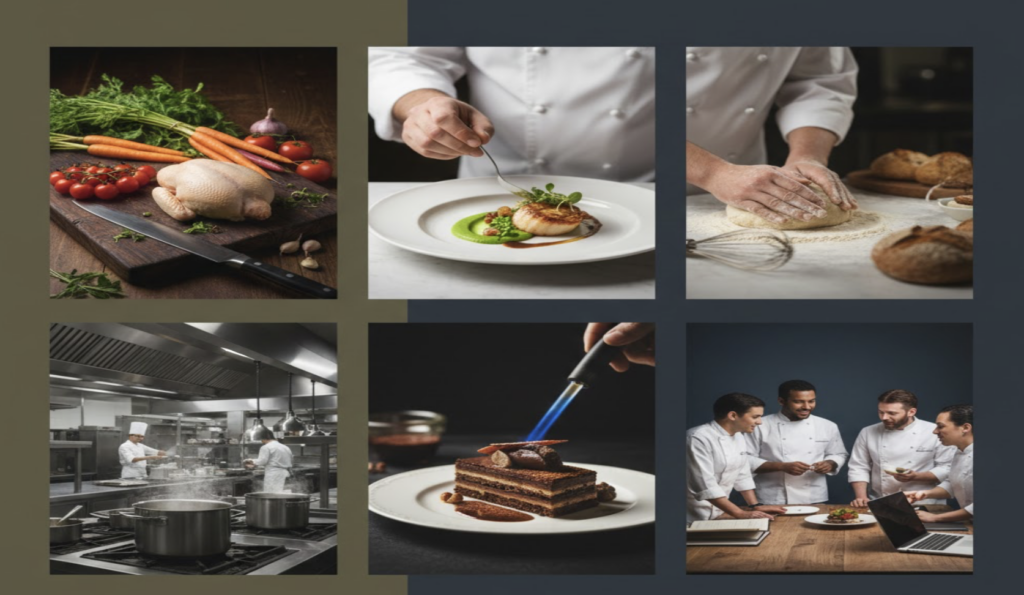
A B.A. in Culinary Arts is more than just a cooking course; it is a professional degree that blends the precision of science with the soul of an artist. It prepares students for a high-octane career in professional kitchens, luxury hotels, and the food entrepreneurship space.
Here is a year-by-year, set-by-set breakdown of the journey from a novice to a professional Chef.
📅 Year 1: The Foundation of Flavor
The first year is all about mastering the basics. You cannot create a masterpiece without knowing how to hold a knife or understand the chemistry of heat.
Set 1: Knife Skills & Basic Science
-
Culinary Fundamentals: Mastering the basic cuts (Julienne, Brunoise, Batonnet) and kitchen safety.
-
Food Science & Nutrition: Understanding how proteins, fats, and carbs react to heat and the nutritional value of ingredients.
-
Basic Stocks & Mother Sauces: Learning the five French Mother Sauces that form the base of global cuisine.
-
Commodity Science: Identifying and sourcing the best quality grains, meats, and vegetables.
-
Hygiene & Sanitation (HACCP): Mastering the strict standards of food safety required in professional kitchens.
Set 2: Introduction to the Professional Kitchen
-
Bakery & Confectionery I: The science of yeast, bread making, and simple sponge cakes.
-
Continental Cuisine I: An introduction to European cooking styles, primarily French and Italian.
-
Food & Beverage Service Basics: Understanding the “Front of House”—how food is served and paired with drinks.
-
Kitchen Management: Learning how a professional kitchen hierarchy (The Brigade System) functions.
📅 Year 2: Expanding the Palate
In the second year, students move beyond basics to explore global flavors and complex techniques like butchery and advanced pastry.
Set 3: Global Cuisines & Advanced Techniques
-
Indian Regional Cuisine: Deep diving into the vast world of Indian spices, gravies, and regional specialties.
-
Oriental & Pan-Asian Cuisine: Mastering the wok, dim sums, and the balance of umami in East Asian cooking.
-
Intermediate Bakery & Pastry: Working with chocolate, puff pastry, and plated desserts.
-
Butchery & Meat Science: Learning to break down different cuts of meat and poultry with precision.
Set 4: Advanced Hot & Cold Kitchen
-
Garde Manger (Cold Kitchen): The art of salads, dressings, terrines, and pâtés.
-
Mediterranean & Middle Eastern Cuisine: Exploring the flavors of Greece, Lebanon, and Turkey.
-
Quantity Food Production: Learning how to cook for 100+ people—essential for banquets and catering.
-
Menu Planning & Design: Understanding the psychology of a menu and how to price items for profit.
💡 The Industry Immersion: Most programs include a 6-month Industrial Training (IT) in a 5-star hotel during the second or third year to give students real-world “line” experience.
📅 Year 3: Culinary Leadership & Innovation
The final year focuses on the “Business” of food and high-end culinary artistry.
Set 5: Specialization & Fine Dining
-
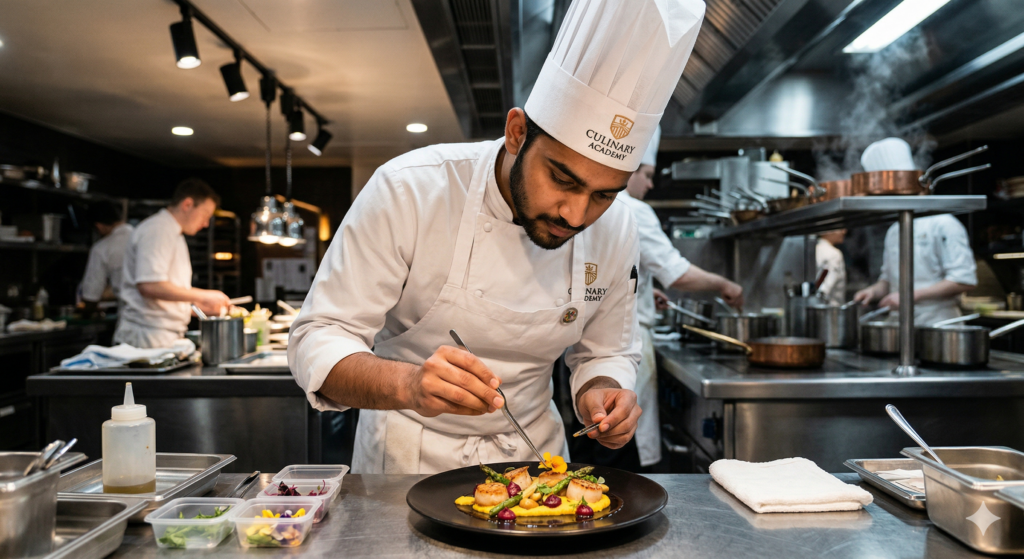
Advanced Gastronomy: Experimenting with Molecular Gastronomy and modern plating techniques.
-
Mass Communication & Food Media: Learning food photography, styling, and how to write about food.
-
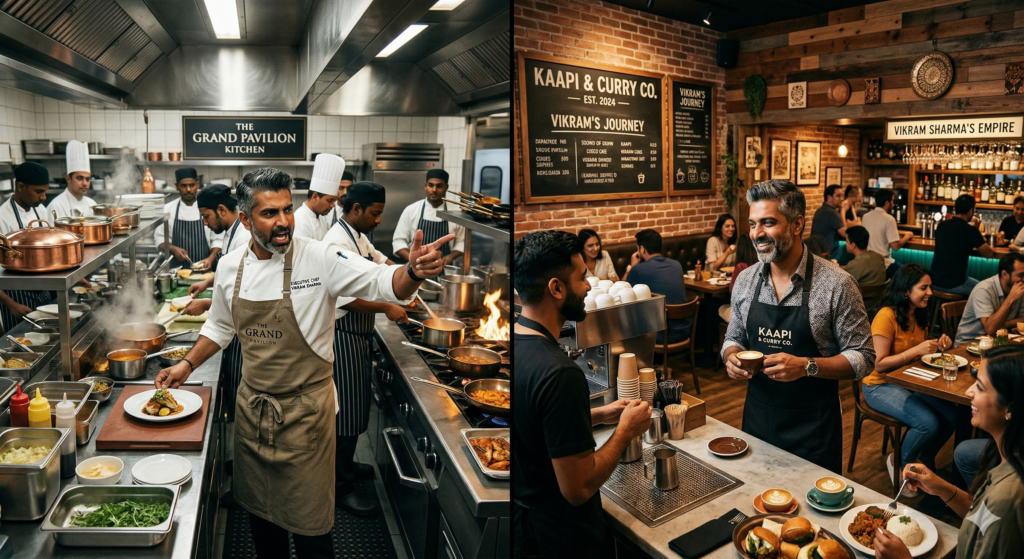
Food Entrepreneurship: How to start your own restaurant, cafe, or cloud kitchen.
-
Wine & Spirit Studies: Understanding global wines, pairings, and mixology.
Set 6: Management & Capstone
-
Food Costing & Control: The math behind the kitchen—ensuring the restaurant stays profitable.
-
Human Resource Management in Hospitality: Learning to lead a team of chefs and kitchen staff.
-
Facility Planning: Designing a kitchen layout for maximum efficiency.
-
Final Project / Pop-Up Restaurant: A final exam where students must plan, cook, and serve a multi-course meal to guests.
🚀 Key Skills You Will Master
-
Sensory Development: Training your palate to identify subtle flavors and seasonings.
-
Precision & Consistency: Producing the same high-quality dish 100 times in a row.
-
Stress Management: Keeping a cool head in a 45°C kitchen during a busy dinner rush.
-
Sustainability: Learning “Zero Waste” cooking to protect the environment and margins.