India Makes It to Asia’s 50 Best. Here’s Why It Took This Long — and Why It Won’t Wait Anymore.


There is a restaurant in Fort Kochi where the chef doesn’t own a written menu. Every morning, he calls his grandmother in Thrissur, asks what vegetables are good at the market, and builds the day’s eight-course meal backwards from her answer. No international food inspector had ever come to Kochi. But this year, something changed.
India’s entry into Asia’s 50 Best Restaurants list — long overdue, long predicted, and now finally, triumphantly real — is being celebrated in press releases and Instagram carousels. But the celebration obscures the more interesting question: why did it take this long? And what does this moment actually mean — for Indian food, for the chefs who stayed, for the grandmothers who were always right?
For most of the last three decades, the global fine-dining establishment treated Asian cuisine as a hierarchy with Japan at the top and everyone else arranged politely below. Tokyo got stars. Bangkok got recognition. Singapore got celebrated for its hawker culture. India got a pat on the head and a comment about bold spices. This wasn’t entirely the world’s fault. India’s fine-dining scene was, until recently, genuinely underdeveloped — not in terms of talent, but in terms of infrastructure, narrative, and the kind of cultural confidence that gets a chef on a plane to San Sebastian to make connections.
There was also a deeper problem: for a long time, the best Indian chefs left. They went to London, New York, Dubai — and cooked Indian food for diaspora crowds who wanted comfort, not provocation. The ones who stayed in India often cooked for hotel chains that wanted continental menus to impress foreign guests. The result was a culinary brain drain that lasted decades.
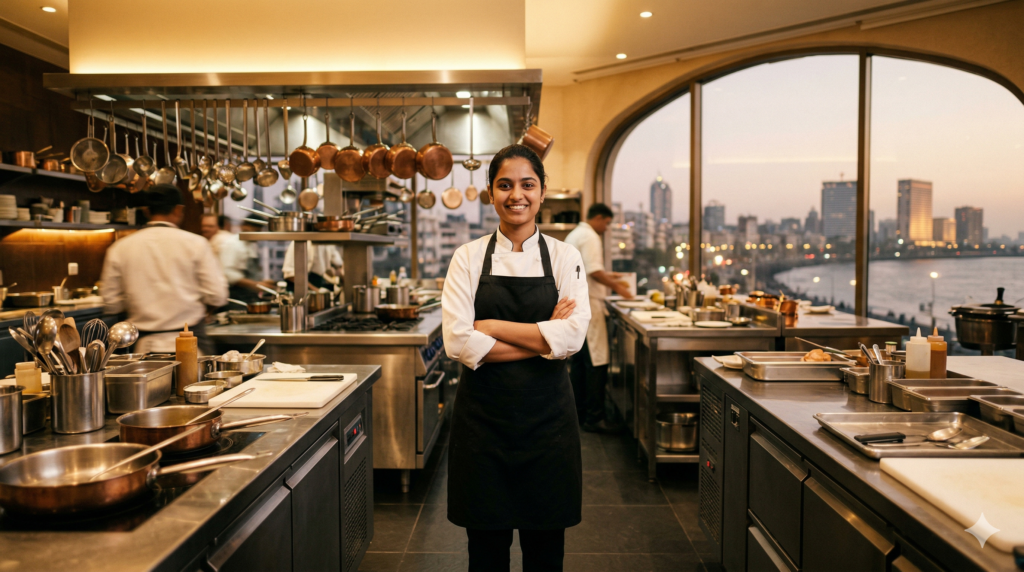
The shift began quietly around 2015, when a small cohort of chefs started coming back. They had trained at serious kitchens in Europe. They had learned how to butcher a carcass in Lyon and how to ferment in Copenhagen. And they came back with a realization that would reshape Indian food: the techniques they had learned abroad were, in many cases, already present in Indian cooking — just undocumented, unarticulated, unvalued. Fermentation? Indian kitchens have fermented for centuries — dosas, idlis, kanji, gundruk. Hyper-local sourcing? The weekly vegetable trader who appears at the back gate of every middle-class Indian home has always been a supply chain. Umami-forward cooking? Visit any Bengali household during monsoon and taste what dried shrimp does to a mustard curry.
What the return generation did was name these things. They created tasting menus around Rajasthani kachri, pointed to the parallels between koji and Indian temple ferments, used modernist plating to slow the diner down long enough to actually pay attention to a black cardamom broth. They gave global food media the vocabulary to understand what was already there.
Three forces converged in the early 2020s to make this moment possible. The pandemic killed the hotel restaurant. For most of India’s modern culinary history, fine dining meant a five-star hotel with a foreign executive chef and an Indian sous chef who cooked the real food at home. COVID-19 closed these hotels for months. When they reopened, standalone chef-driven restaurants — which had been slowly building audiences — suddenly looked like the only model that worked. Then the audience grew up. India now has a substantial upper-middle class that has traveled, eaten widely, and started to find pride in Indian cuisine rather than apologizing for it. Being taken to a restaurant showcasing Manipuri heritage vegetables is now a flex. It wasn’t always. And finally, Instagram created a global audience before the critics arrived. Indian chefs built international followings through social media before the Asia’s 50 Best voters caught up. The voters came because the chefs had already won.
There is a paradox at the heart of modern Indian fine dining: the best reference points are the least documented. Indian culinary knowledge has historically been transmitted orally, within households, by women who never wrote recipes because no one asked them to. Japanese cuisine had a centuries-old documentation culture. French cuisine had Escoffier. Indian cuisine had aunts. But something interesting happened when chefs started treating this oral tradition as a resource rather than a gap. The undocumented nature of Indian food — the fact that a dish in one village differs from the dish five kilometers away — became a feature, not a bug. The chefs making international lists are almost universally the ones who went deepest into this undocumented archive. They hired researchers. They went to villages. They recorded elderly cooks. And they discovered that it was, by global standards, extraordinary.
Success has a way of creating its own distortions. The risk now is that a new conformism replaces the old invisibility — that the pressure to perform for international voters gradually sands down the rougher, more culturally specific edges that made Indian fine dining interesting in the first place. The ideal outcome of this moment is not that India gets more restaurants on international lists. It’s that international lists start to look more like India.
Back in Fort Kochi, the chef without a written menu is still calling his grandmother every morning. He is not on any list. His restaurant seats twelve people. There is a six-month waiting list composed almost entirely of word of mouth. When asked whether he was excited about India’s moment on the global stage, he was quiet for a moment. Then he said: the food was always there. We just stopped being embarrassed about it.
That’s not a press release. That’s a revolution.