India’s Hospitality Boom: Room Rates Rising 6%, MICE & Wedding Tourism Exploding — Are You Trained to Lead It?


RPH College of Hospitality Management | Market Analysis | April 2026 | Keywords: RevPAR India 2026, MICE tourism careers, wedding tourism hospitality, hotel management admissions
India’s Hotels Are Having Their Best Year Ever — and They Need You
The numbers coming out of India’s hospitality sector in early 2026 are not incremental; they are historic. Average Room Rates (ARR) are projected to grow by 6% year-on-year, Revenue Per Available Room (RevPAR) is on track for record highs, and occupancy levels in business-travel corridors are touching 78–82% — numbers that most global hotel markets would envy. Behind these statistics is a simple, urgent truth: India’s hospitality sector is booming, and it does not have enough trained people to run it.
The Three Engines Driving India’s Hospitality Growth
Three distinct demand pools are fuelling this unprecedented expansion. First, domestic business travel has rebounded sharply post-pandemic, with corporate India aggressively travelling for sales, operations, and leadership meetings. Second, the MICE segment — Meetings, Incentives, Conferences, and Exhibitions — has emerged as a high-margin, high-volume category that India is actively courting from global organisers. Third, and perhaps most visibly, wedding tourism has exploded into a ₹50,000-crore-plus industry with couples booking entire resorts across Rajasthan, Goa, Kerala, and Himachal for multi-day celebrations that demand military-level hospitality coordination.
MICE: The Career Category That Most Students Underestimate
Ask most Class 12 students what a hotel management career looks like, and they picture a front desk or a fine-dining kitchen. They rarely picture themselves coordinating a 3,000-delegate pharmaceutical conference at a five-star hotel in Hyderabad, managing AV setups, delegate accommodation, bilateral meeting rooms, gala dinners, and airport transfers simultaneously. Yet that is exactly what MICE professionals do — and they are among the highest-paid, fastest-promoted specialists in the hospitality ecosystem. RPH’s MICE and events curriculum prepares students not just to assist these events, but to lead them.
Wedding Tourism: Where Hospitality Meets High Stakes
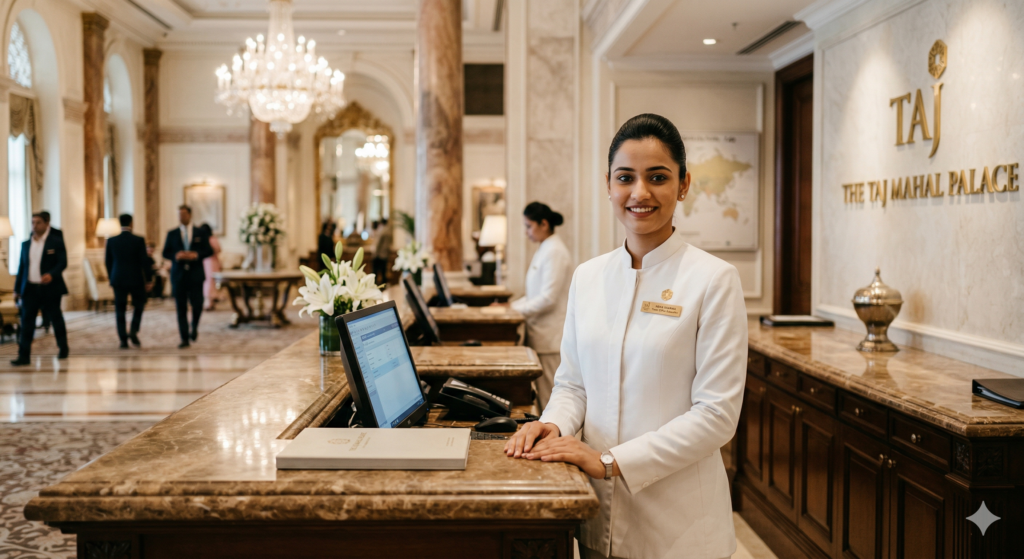
India’s wedding tourism industry is one of the fastest-growing segments of the global hospitality economy. International couples are increasingly choosing Indian palace hotels and heritage resorts for destination weddings, while domestic high-net-worth families are spending ₹5–25 crore on multi-day celebration formats that transform hotels into experiential venues. The coordination demands — from bespoke menu design to décor logistics, from multi-vendor management to real-time guest experience — require hospitality professionals with a breadth of skills that only structured training can deliver.
Tier II Cities: Where the Real Opportunity Lives
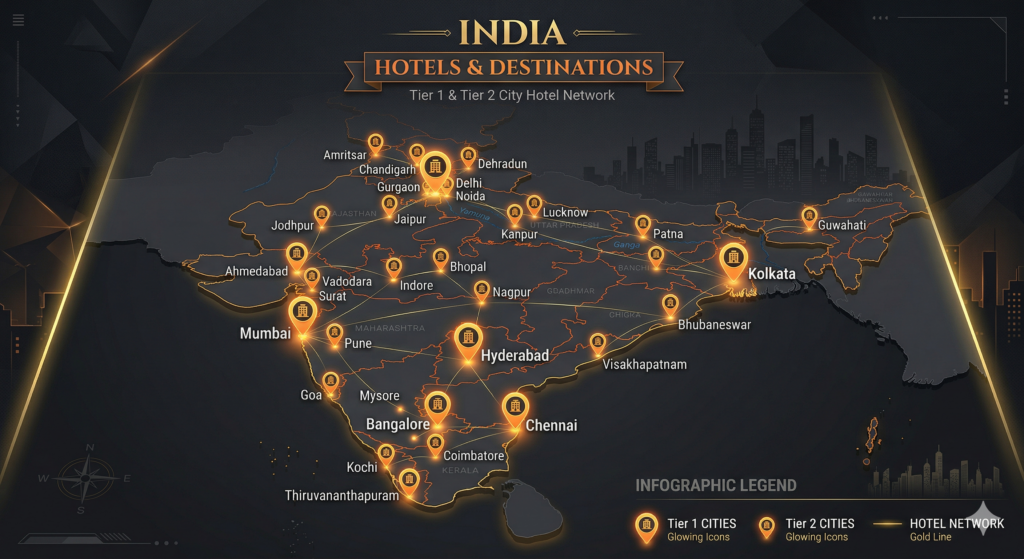
Much of the narrative around India’s hospitality boom focuses on metro cities, but the real growth story is in Tier II and III markets. Cities like Indore, Surat, Coimbatore, Nashik, and Bhubaneswar are witnessing hotel inventories double and triple as corporate India moves operations to lower-cost, high-productivity centres. These markets are chronically underserved by trained hospitality talent, which means graduates who are willing to start their careers outside the four metros can expect faster promotions, higher relative compensation, and richer operational experience than their metro-placed peers.
The Skills Gap Is Your Opportunity
Here is the uncomfortable truth that hotel chains and resort groups will not advertise openly: they are struggling to find trained staff. Not unskilled labour — trained professionals who understand yield management, guest-experience design, F&B cost controls, and digital hospitality tools. The gap between the trained talent available and the trained talent required is widening every quarter. For RPH students who graduate with hands-on operational skills, multiple language fluency, and a professional network built through industrial training, this gap is not a problem. It is a permanent competitive advantage.
Your Career Trajectory in a Booming Market
Students who join hotel management in 2026 and graduate in 2029–30 will enter a market at peak expansion. The hotels being planned and built today will be the properties recruiting aggressively at exactly that moment. Entry-level roles in revenue management, F&B supervision, events coordination, and front-office operations at branded properties now start at ₹3.5–5 lakh per annum, with accelerated growth tracks for high performers. Within five years, Department Head roles at mid-scale properties and Assistant General Manager positions at select-service hotels are realistic targets. The boom is not ending. It is accelerating. The only question is whether you will be trained to lead it.