Culinary Tourism Is a ₹1.3 Lakh Crore Industry Growing at 15.6% — India’s Chefs Are the New Entrepreneurs

RPH College of Hospitality Management | Culinary Arts | April 2026 | Keywords: culinary arts degree India, food entrepreneurship, culinary tourism India, chef careers 2026
Food Is No Longer Just Fuel — It Is a ₹1.3 Lakh Crore Industry
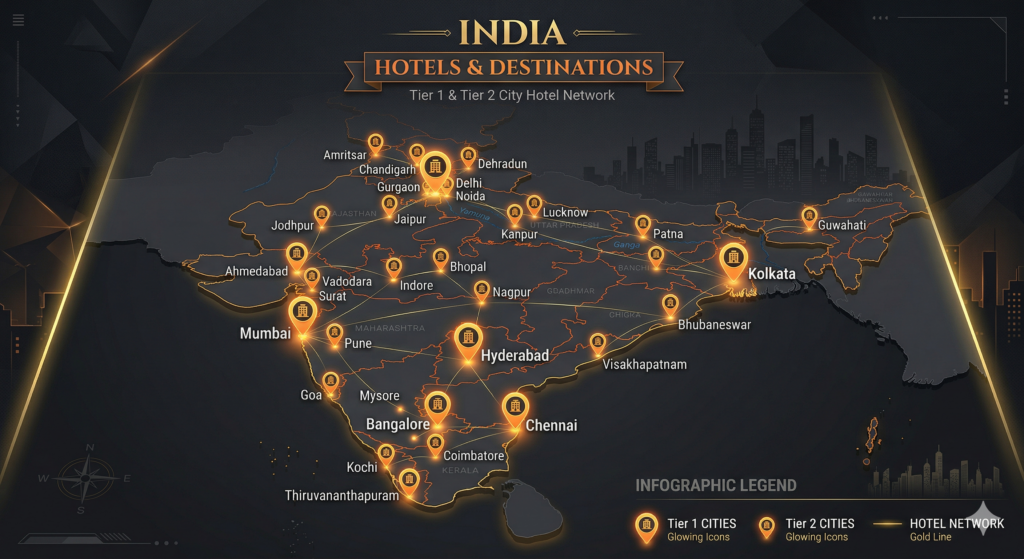
According to Future Market Insights, India’s culinary tourism market is valued at USD 15.9 billion in 2026 — approximately ₹1.3 lakh crore — and is projected to reach USD 21 billion by 2036, expanding at a compound annual growth rate of 15.6%. These are not restaurant revenues. These are the economic footprints of travellers who choose destinations specifically because of food: street food trails in Kolkata, spice plantation tours in Kerala, cooking holidays in Rajasthan, and farm-to-table experiences in the Konkan coast. The chef is no longer just behind the stove. The chef is at the centre of a global tourism economy.
The 56% Statistic That Changes Everything
Travel and Tour World’s April 2026 data reveals that 56% of travellers now cite food as a primary motivation for their destination choice. More than beaches. More than heritage. More than adventure sports. Food. This single statistic should reframe how every aspiring culinary arts student thinks about their degree. A Culinary Arts education from a structured institution is not training you to make food — it is training you to create experiences that move people across geographies, that generate room nights, that drive local agricultural economies, and that place India on the global map of gastronomic excellence.
From Chef to Entrepreneur: The New Career Arc
The traditional arc of a culinary career — commis chef to chef de partie to sous chef to executive chef — is no longer the only trajectory. India’s food economy is producing a new breed of culinary entrepreneur: the food experience designer. These are chefs who launch pop-up restaurants at heritage hotels, curate agri-tourism trails for incoming tour groups, develop private-label condiment brands sold across premium supermarkets, create YouTube cooking channels with monetisable audiences, and consult for cloud kitchen brands building regional cuisine verticals. The Culinary Arts degree is increasingly a launchpad, not a job application.
Regional Cuisines Are Having Their Global Moment
International interest in Indian regional cuisines has never been higher. Chettinad, Malvani, Awadhi, Assamese, and Coorg cuisines are being discovered by food journalists, Michelin evaluators, and travel influencers who are actively seeking authentic, expert-led culinary experiences. For RPH culinary arts students trained in both classical technique and regional Indian traditions, this is a first-mover advantage. The chef who can articulate the history of a Malvani sol kadhi or recreate a 200-year-old Nawabi biryani with documented authenticity is not just a cook — they are a cultural ambassador commanding premium pricing.
The Cloud Kitchen Economy and Its Talent Appetite
India’s cloud kitchen sector grew at over 30% annually between 2022 and 2025 and shows no signs of decelerating. Brands like Rebel Foods, Biryani by Kilo, and dozens of VC-backed regional cuisine chains are perpetually hungry for culinary talent with both technical skills and a business mindset. They are not looking for chefs who can only cook — they are looking for culinary professionals who understand menu engineering, food cost ratios, kitchen workflow optimisation, and consumer trend analysis. This is precisely the hybrid skill set that a well-structured culinary arts programme delivers.
Why RPH’s Culinary Programme Is Built for This Moment
RPH’s Culinary Arts curriculum is designed around three pillars: technical mastery, entrepreneurial thinking, and cultural intelligence. Students do not simply learn to cook — they learn to cost a menu, design a guest food journey, source sustainably, and market a food concept. The live kitchen labs expose students to real pressure, real wastage calculations, and real service rhythms. The culinary tourism modules — a relatively rare offering in Indian hospitality education — directly address the USD 15.9 billion market that employers and investors are chasing. RPH graduates are not entering the culinary industry. They are entering it equipped to lead it.
The Decision in Front of You
If you love food — genuinely, deeply, creatively — and you are asking yourself whether a Culinary Arts degree can build a real career, the ₹1.3 lakh crore answer is a resounding yes. The industry is not waiting for more passionate home cooks. It is waiting for trained, credentialled culinary professionals who can take India’s extraordinary food heritage and turn it into world-class hospitality experiences. RPH College of Hospitality Management is where that transformation begins.