Why a PGDM or MBA in 2025 Is Still the Smartest Investment a Graduate Can Make — And How UKS Delivers It


Every year, thousands of Indian graduates ask the same question: is an MBA still worth it? With LinkedIn full of startup founders who skipped business school and YouTube channels celebrating “learn-to-code” careers, the debate has never been louder. Here is the honest answer — not as a sales pitch, but as a data-informed case for why a well-chosen management degree in 2025 remains one of the highest-ROI decisions a graduate can make, and why where you study matters more than ever.
The MBA Value Debate: What the Numbers Actually Say
The critics are not entirely wrong. A generic, tier-three MBA from a college coasting on outdated syllabi and zero industry connections can set you back two years and a significant sum with little to show for it. That version of the degree deserves scrutiny.
But conflating that with the broader category of management education is a mistake. According to the All India Survey on Higher Education and placement data aggregated by platforms like AmbitionBox and Glassdoor India, the median starting salary for an MBA or PGDM graduate from a recognised institution in India ranges between ₹6–12 LPA, compared to ₹3–5 LPA for a general bachelor’s degree holder in a comparable field. In functions like financial analysis, brand management, and HR business partnering, the gap widens further over a five-year career arc.
The question, then, is never “MBA or no MBA.” It is “which MBA, at which institution, with which specialisation?”
PGDM vs MBA India: Understanding the Distinction That Matters
A persistent source of confusion for graduates is the difference between an MBA and a PGDM. An MBA (Master of Business Administration) is a degree awarded by a university. A PGDM (Post Graduate Diploma in Management) is awarded by an AICTE-approved autonomous institution and is widely considered equivalent — and in several ways, superior.
Because PGDM-granting institutions are autonomous, they are not bound by the slow revision cycles of university-affiliated curricula. They can update their syllabi annually, embed live projects, bring in industry practitioners as faculty, and align coursework directly with what employers are asking for right now. In a business environment reshaped by generative AI, ESG mandates, and volatile global supply chains, that agility is not a minor advantage — it is the entire point.
When evaluating PGDM vs MBA in India, the smarter question is: does the institution have the flexibility to teach you what 2025 actually demands?
Why MBA Specialisation in India Is Now Non-Negotiable
The era of the all-purpose “general management” graduate is fading. Recruiters today are not looking for someone who knows a little about everything. They want a finance professional who understands data modelling, a marketing manager who can read a performance dashboard, an HR leader who can build a workforce analytics strategy.
This is why MBA specialisation in India has shifted from a differentiator to a baseline expectation. The specialisations that are commanding the strongest placement outcomes in 2025 are concentrated in four domains:
AI and Business Analytics sits at the intersection of two of the fastest-growing demand areas in the Indian economy. Companies across BFSI, retail, logistics, and healthcare are urgently hiring people who can bridge business problems and data solutions.
Finance remains evergreen, but the profile has evolved. Fintech, private equity, and corporate treasury roles now require candidates who are as comfortable with Python-based financial modelling as they are with traditional valuation frameworks.
Marketing has been completely transformed by digital. Performance marketing, brand strategy, and customer experience management are distinct career tracks, each requiring depth that a generic course cannot provide.
Human Resources has quietly become one of the most strategic functions in the modern organisation. People analytics, DEI strategy, and talent architecture are board-level conversations now, and HR specialists with strong management training are rare and well-compensated for it.
Graduates who choose a specialisation thoughtfully and back it with the right programme are entering the job market with a clarity that generalists simply cannot match.
Mumbai’s Business Ecosystem: An Unfair Advantage You Should Use
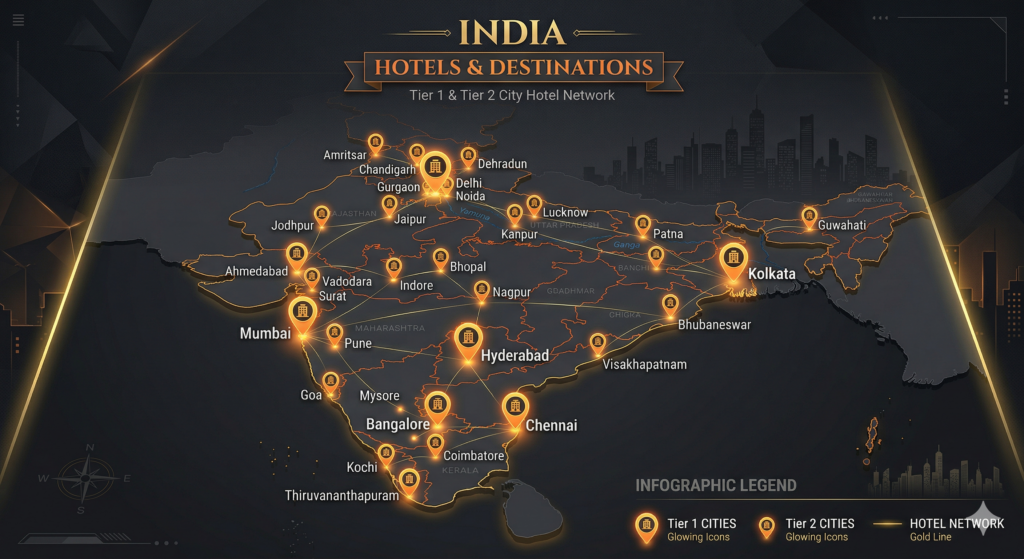
Location is an underrated variable in management education. Mumbai is not merely a large city — it is India’s financial capital, home to the Bombay Stock Exchange, the Reserve Bank of India, the headquarters of virtually every major Indian conglomerate, and the Indian offices of the world’s leading consulting, investment banking, and FMCG firms.
For a management student, studying in Mumbai means access to guest lectures by practitioners who are actually running businesses, internship opportunities at firms that do not recruit from smaller cities, and a professional network built in the city where careers in finance, marketing, and strategy tend to begin and accelerate. The case studies are not hypothetical — they are happening three floors above a trading floor a few kilometres away.
Institutions embedded in this ecosystem can offer a quality of live exposure that no case study library, however well-curated, can replicate. Industry visits, live consulting projects, and placement pipelines built over decades of alumni relationships are worth factoring seriously into your institution decision.
Management Degree ROI: How to Think About the Investment Correctly
The ROI of a management degree is rarely calculated well. Most people subtract the fee from the first-year salary and call it a number. The correct calculation is longer and more nuanced.
Consider the compounding effect: a graduate who enters a marketing role at ₹4 LPA without a management degree and one who enters a brand management role at ₹8 LPA with a PGDM are not just ₹4 LPA apart in year one. Over a ten-year career, assuming standard increment rates and accounting for the faster promotion track that management training typically enables, the gap compounds significantly.
Add to this the network value — the batchmates who become founders, the seniors who refer you for roles, the faculty who open doors — and the true return on a well-chosen management education becomes harder to dispute.
The caveat, and it is an important one: this ROI is institution-dependent. Fee alone is not a proxy for value. Placement outcomes, faculty quality, industry immersion, and alumni strength are the variables that actually determine your return.
Why UKS Institute Delivers on Every One of These Variables
UKS Institute of Management Studies, under the Bunts Sangha umbrella in Mumbai, is built precisely around the framework this article has outlined. The PGDM programme offers specialisations in Finance, Marketing, HR, and emerging areas aligned with current industry demand. The curriculum is designed for agility — not frozen in a university revision cycle, but responsive to what recruiters and industry practitioners are actually signalling.
The faculty mix at UKS combines academic rigour with real-world experience. The institution’s placement network, cultivated through decades of alumni relationships and corporate partnerships across Mumbai’s business community, gives students access to recruitment pipelines that extend well beyond what a campus job fair typically delivers.
For a graduate in 2025 who is serious about building a management career — who wants specialisation, industry exposure, Mumbai’s ecosystem advantage, and a placement record that justifies the investment — UKS represents exactly the kind of high-value, thoughtfully designed programme that makes the MBA question easy to answer.
The Bottom Line
Is an MBA worth it in 2025 in India? Yes — if you choose the right institution, the right specialisation, and the right city. The graduates who will look back and say it was the best decision they made are the ones who chose depth over convenience, specialisation over generic credentials, and an institution with genuine industry roots over a brand name with no placement substance.
That choice is available to you right now.
Explore the PGDM programmes at UKS Institute of Management Studies at uks.bunts.edu.in. Applications for the 2025–27 batch are open. Make the decision that compounds.